
 Image 1 of 5
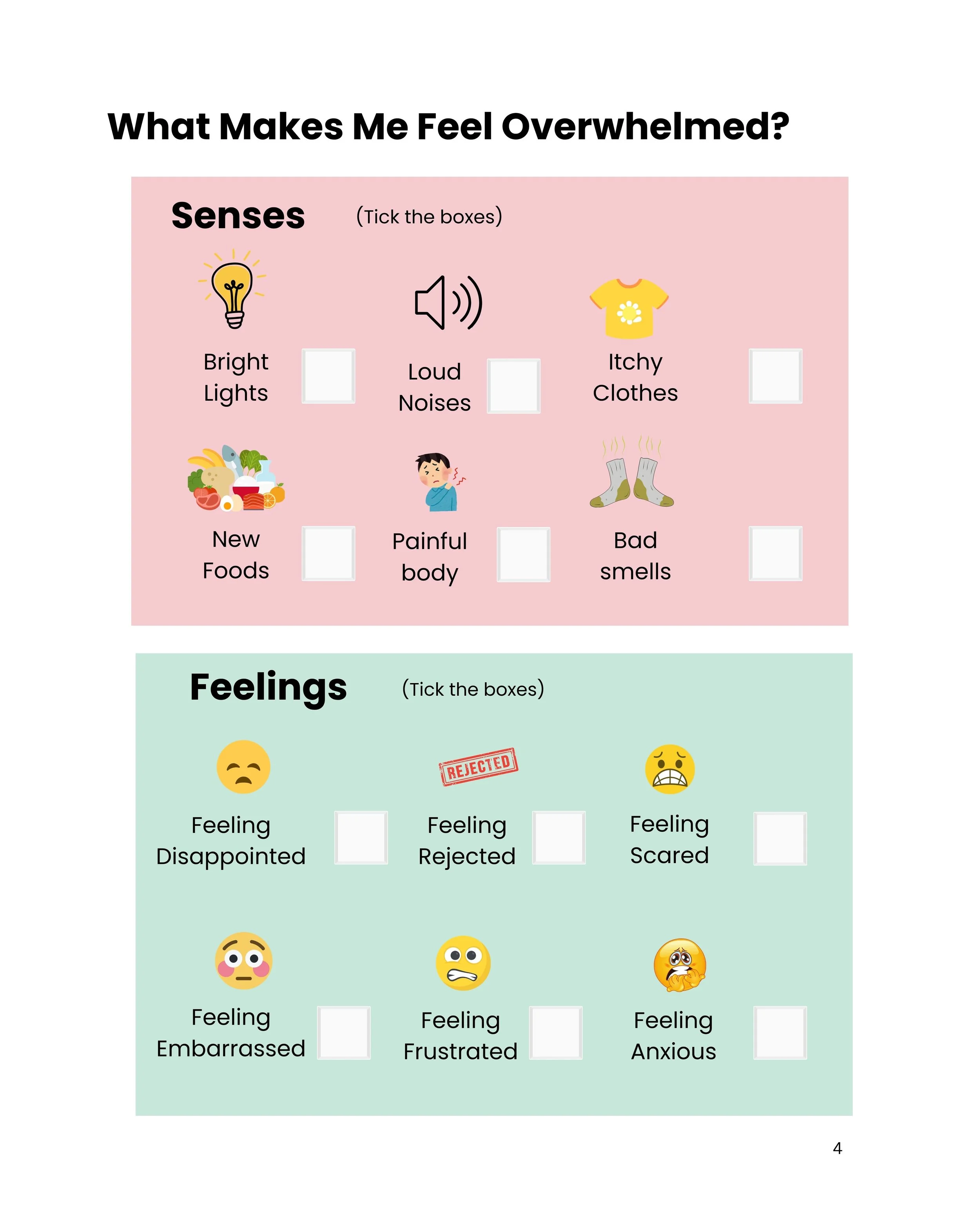 Image 2 of 5
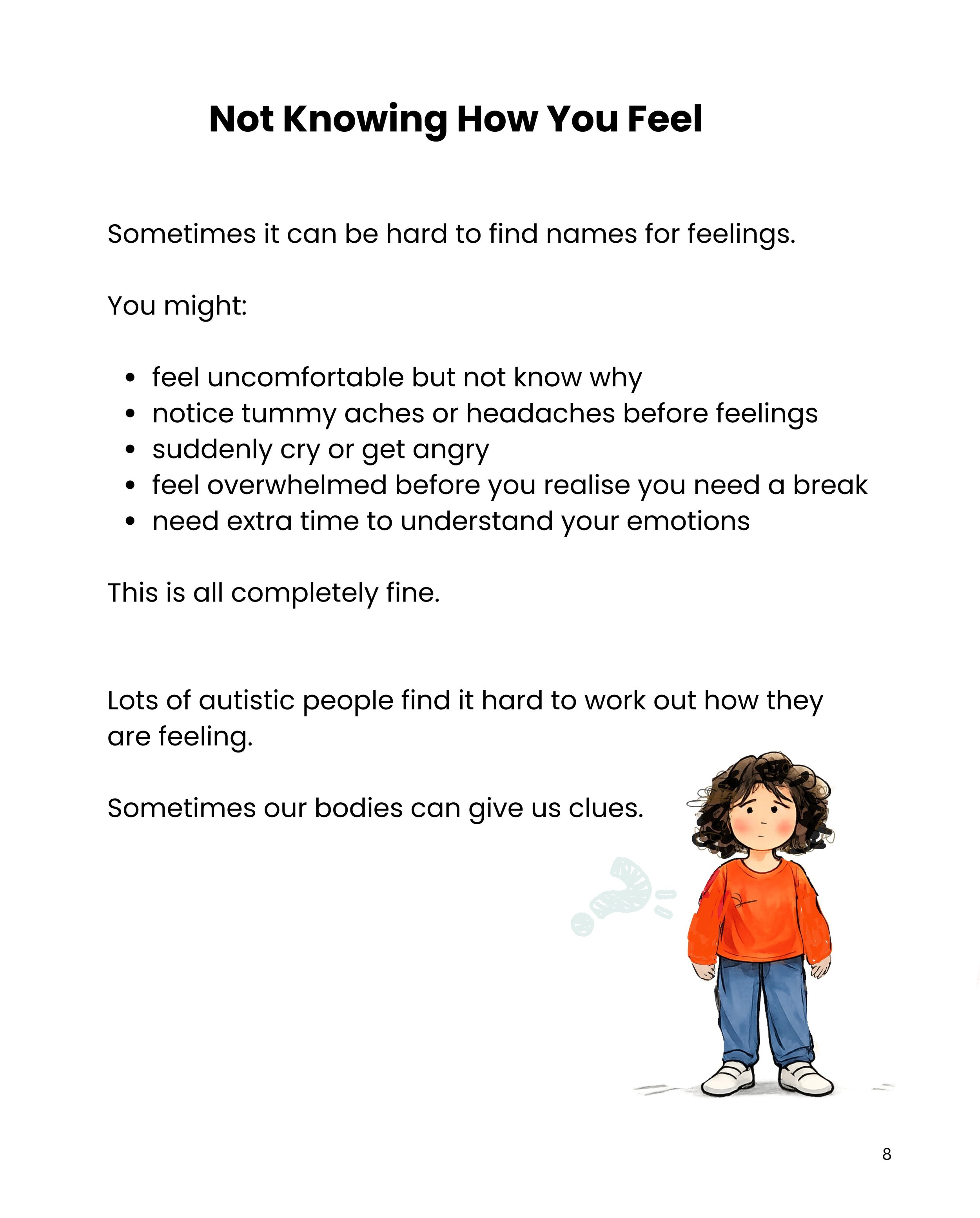 Image 3 of 5
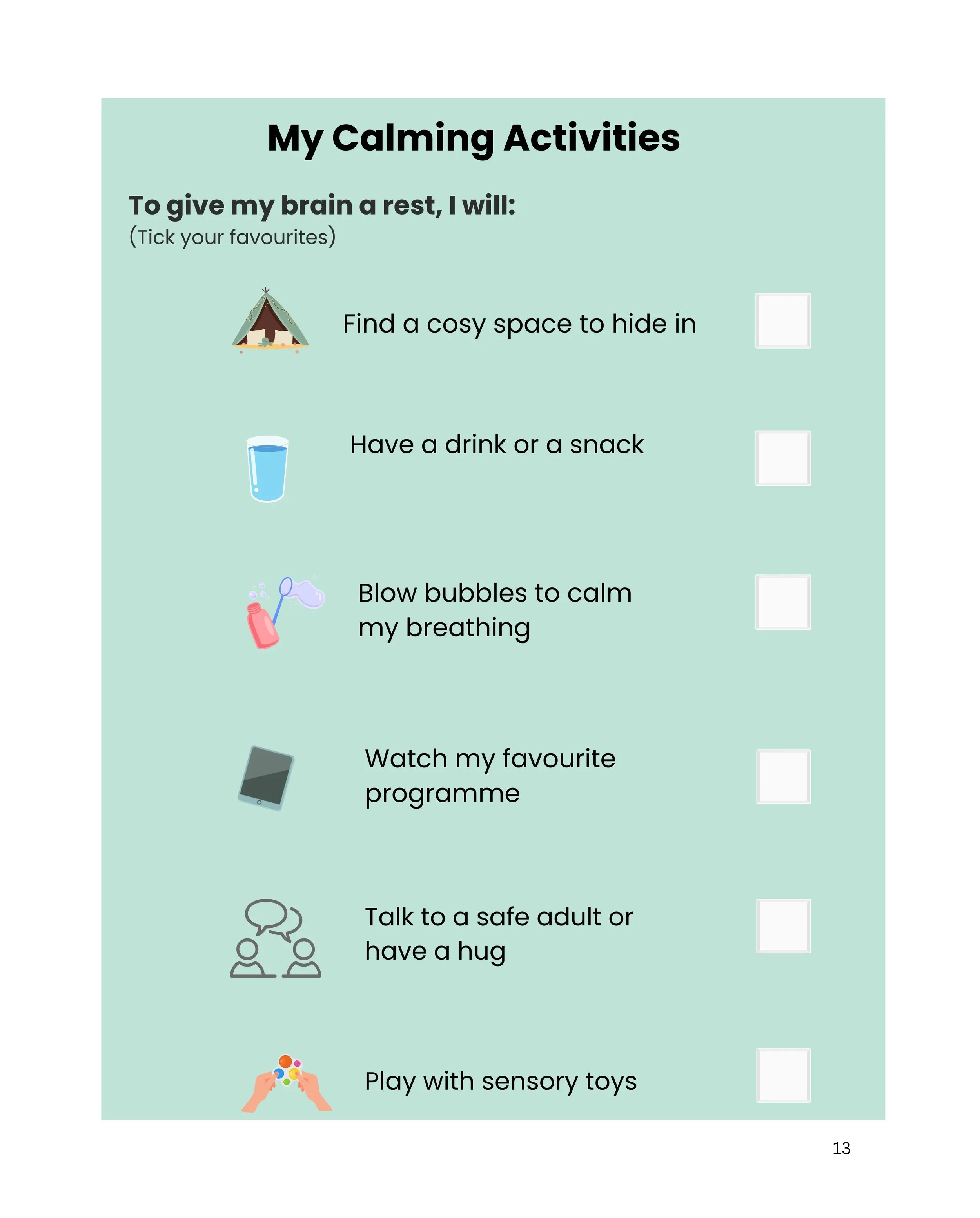 Image 4 of 5
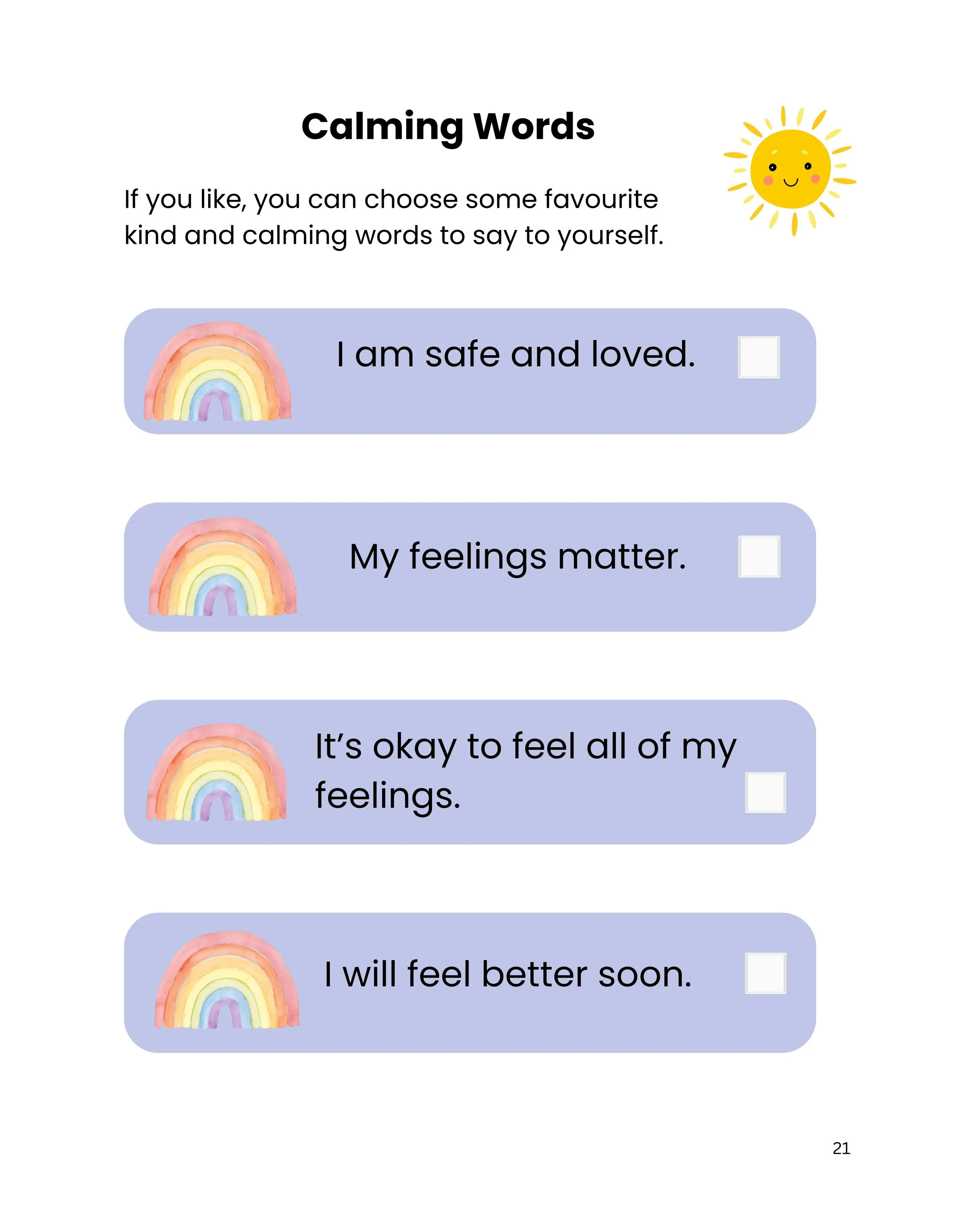 Image 5 of 5
Does your child often become overwhelmed but struggle to explain why?
This child-friendly workbook helps children recognise the things that trigger overwhelm, understand what happens in their bodies and discover personalised strategies that help them feel calm again.
Using simple language, engaging activities and beautiful illustrations throughout, children are supported to explore their sensory experiences, emotions, body clues and favourite calming strategies at their own pace. By the end of the workbook, they'll have created their own personalised calm toolkit that can be used both at home and in school.
Identifying sensory, emotional and situational triggers
Understanding fight, flight and freeze responses
Recognising body clues and physical signs of overwhelm
Exploring calming activities and sensory regulation strategies
Creating a personalised calm plan
Designing a calm box
Identifying trusted adults who can help
Interactive activities, checklists and reflection pages throughout
Parents and carers
Primary schools
SENCOs
ELSAs
Teaching assistants
Occupational therapists
Counsellors
Autism support services
Children approximately 5–11 years, particularly autistic and other neurodivergent children who would benefit from learning about emotions, body signals and self-regulation in a positive, accessible way.
Digital Download (PDF)
Print at home or use again and again in school or therapy sessions.
Does your child often become overwhelmed but struggle to explain why?
This child-friendly workbook helps children recognise the things that trigger overwhelm, understand what happens in their bodies and discover personalised strategies that help them feel calm again.
Using simple language, engaging activities and beautiful illustrations throughout, children are supported to explore their sensory experiences, emotions, body clues and favourite calming strategies at their own pace. By the end of the workbook, they'll have created their own personalised calm toolkit that can be used both at home and in school.
Identifying sensory, emotional and situational triggers
Understanding fight, flight and freeze responses
Recognising body clues and physical signs of overwhelm
Exploring calming activities and sensory regulation strategies
Creating a personalised calm plan
Designing a calm box
Identifying trusted adults who can help
Interactive activities, checklists and reflection pages throughout
Parents and carers
Primary schools
SENCOs
ELSAs
Teaching assistants
Occupational therapists
Counsellors
Autism support services
Children approximately 5–11 years, particularly autistic and other neurodivergent children who would benefit from learning about emotions, body signals and self-regulation in a positive, accessible way.
Digital Download (PDF)
Print at home or use again and again in school or therapy sessions.